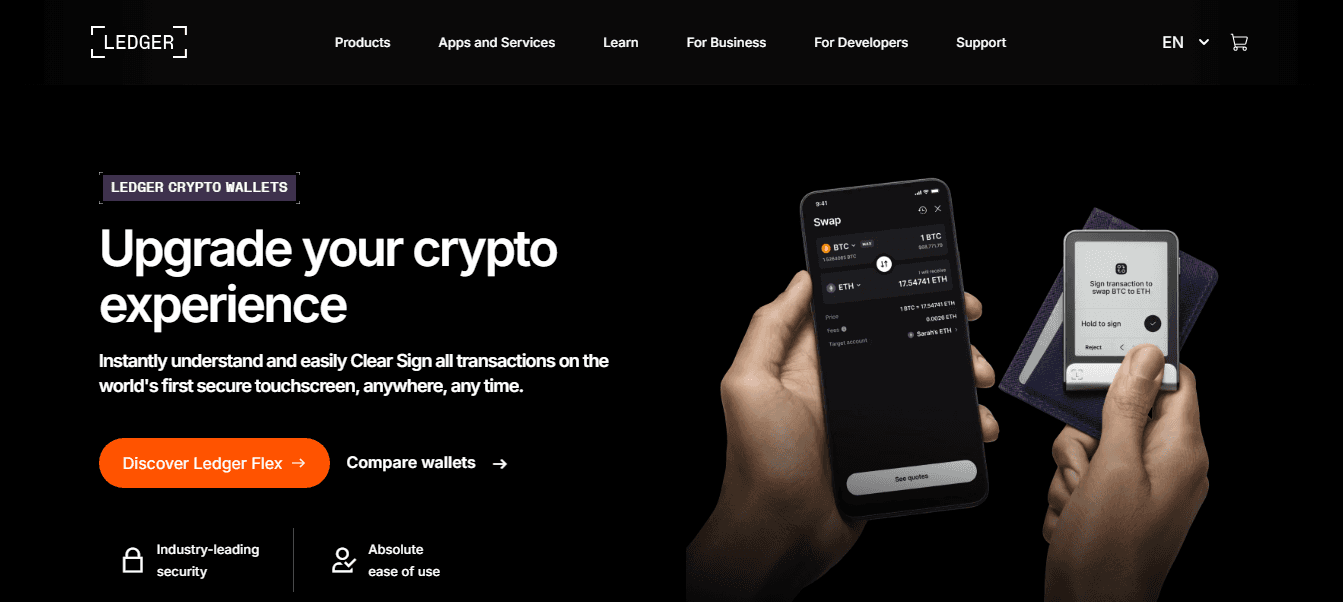
Ledger Live Login: Understanding Secure Access in the Ledger Ecosystem
Introduction to Ledger Live Login
Ledger Live Login is the secure access process that allows users to interact with their cryptocurrency holdings through the Ledger Live application while maintaining full control via a Ledger hardware wallet. Unlike traditional digital platforms that rely on account credentials and centralized authentication systems, Ledger Live Login operates on a hardware-verification model.
This model ensures that access to funds and sensitive actions is granted only when the user is physically present with their Ledger device. As cybercrime continues to evolve, Ledger Live Login offers a modern, security-first approach that aligns with the decentralized principles of blockchain technology.
What Ledger Live Login Is—and What It Is Not
Ledger Live Login is often misunderstood as a standard app login. In reality, it functions very differently.
Ledger Live Login Is
A hardware-authorized access method
A cryptographic verification process
A bridge between blockchain networks and a Ledger device
Ledger Live Login Is Not
An account-based login
A password or email system
A cloud-controlled authentication service
Understanding this distinction is essential for using Ledger Live securely.
Why Ledger Live Login Was Designed
Ledger Live Login exists to solve fundamental security problems present in traditional financial systems.
Security Challenges in Traditional Logins
Password leaks and database breaches
Phishing and fake login pages
Centralized points of failure
Third-party custody risks
Ledger Live Login removes these weaknesses by eliminating stored credentials and shifting control entirely to the user.
The Ledger Hardware Wallet as the Login Authority
The Ledger hardware wallet is the centerpiece of Ledger Live Login.
How the Hardware Wallet Functions
Generates private keys offline
Stores keys inside a certified secure element
Signs transactions internally
Displays critical information for verification
Ledger Live cannot authorize actions independently—it must receive approval from the connected hardware wallet.
Ledger Live Login Without Accounts or Registration
One of the defining features of Ledger Live Login is the absence of user accounts.
No Account Means
No emails to compromise
No password resets
No customer support override
No centralized user database
Ownership is proven by possession of cryptographic keys, not by identity verification.
How Ledger Live Login Works in Practice
Ledger Live Login follows a structured interaction flow between software and hardware.
Typical Login Sequence
User opens Ledger Live
Ledger device is connected via USB or Bluetooth
Device prompts for PIN entry
Secure element unlocks key access
Ledger Live gains permission to display wallet data
This process ensures login access is intentional and user-driven.
The Role of the PIN in Ledger Live Login
The PIN code protects the Ledger device from unauthorized use.
Why the PIN Is Critical
Prevents access if the device is stolen
Limits brute-force attempts
Triggers device reset after repeated failures
The PIN is never shared with Ledger Live or stored externally.
Recovery Phrase and Ledger Live Login Ownership
The recovery phrase is the most important element of Ledger Live Login.
What the Recovery Phrase Represents
Complete ownership of wallet funds
The ability to restore login access
Independence from any single device
The phrase consists of 24 randomly generated words and must be stored offline.
Restoring Ledger Live Login After Device Loss
Ledger Live Login can always be restored if the recovery phrase is available.
Login Restoration Process
Install Ledger Live on a new device
Connect a new Ledger hardware wallet
Choose “Restore from recovery phrase”
Enter the 24-word phrase
Create a new PIN
Once completed, Ledger Live Login resumes with full access.
Ledger Live Login on Desktop Computers
Ledger Live Login on desktop platforms offers a comprehensive management experience.
Supported Desktop Systems
Windows
macOS
Linux
Desktop Login Advantages
Larger interface for transaction review
Stable wired connections
Access to full Ledger Live features
The login security remains hardware-based regardless of the operating system.
Ledger Live Login on Mobile Devices
Mobile access provides flexibility without sacrificing security.
Mobile Platform Support
Android
iOS
Mobile Login Methods
Bluetooth-enabled Ledger devices
Encrypted communication channels
Mandatory on-device approval
Ledger Live Login on mobile maintains the same security standards as desktop.
Bluetooth Connectivity and Login Security
Bluetooth often raises security concerns, but Ledger Live Login uses it safely.
How Bluetooth Is Secured
Encrypted data transmission
No private key sharing
Device confirmation still required
Bluetooth serves only as a transport layer and does not weaken login security.
Viewing Wallet Information After Login
Once Ledger Live Login is complete, users can access read-only information.
What Can Be Viewed Without Approval
Account balances
Transaction history
Portfolio allocation
This information is retrieved from public blockchain data.
Ledger Live Login for Outgoing Transactions
Sending crypto requires full authorization.
Transaction Approval Workflow
Transaction created in Ledger Live
Details displayed on the Ledger device
User verifies address and amount
Transaction approved physically
This prevents unauthorized transfers and malware-based attacks.
Ledger Live Login for Receiving Funds
Receiving funds does not require approval but still involves verification.
Receiving Workflow
Ledger Live generates an address
Address is displayed on the device
User verifies accuracy before sharing
This protects against address substitution attacks.
Ledger Live Login and NFT Operations
Ledger Live Login supports NFT management on compatible networks.
NFT Capabilities
View NFT assets
Transfer NFTs securely
Confirm ownership
All NFT transfers require device approval.
Ledger Live Login and Staking Participation
Ledger Live allows users to stake supported assets.
Staking with Ledger Live Login
Assets remain in user custody
Staking actions require device approval
Rewards are tracked in-app
Ledger Live Login ensures staking remains non-custodial.
Ledger Live Login and Web3 Interaction
Ledger Live Login enables secure interaction with decentralized applications.
Web3 Use Cases
DeFi protocols
NFT marketplaces
DAO governance
Blockchain gaming
Each interaction requires explicit confirmation on the Ledger device.
Using WalletConnect with Ledger Live Login
WalletConnect expands Ledger Live Login functionality.
WalletConnect Process
dApp requests a connection
Ledger Live displays the request
Ledger device shows details
User approves or rejects
This ensures secure decentralized authentication.
Security Architecture Supporting Ledger Live Login
Ledger Live Login is supported by layered security.
Key Security Components
Secure element chip
Ledger operating system isolation
Cryptographic signing
Firmware integrity verification
These layers work together to protect against digital and physical threats.
Ledger Live Login vs Software Wallet Logins
AspectLedger Live LoginSoftware Wallet LoginKey StorageOffline hardwareOnline or device memoryAuthenticationPhysical confirmationPassword/biometricMalware ResistanceVery highModerateLong-Term SafetyStrongLimited
Ledger Live Login offers superior protection for serious users.
Common Ledger Live Login Problems
Occasional technical issues may occur.
Typical Causes
Outdated Ledger Live version
Firmware mismatch
USB cable issues
Bluetooth interference
These issues are technical, not security failures.
Resolving Ledger Live Login Issues
Recommended Steps
Update Ledger Live
Update device firmware
Restart device and application
Use official cables and software
Most login issues are resolved quickly.
Ledger Live Login and Privacy Protection
Ledger Live Login is designed with privacy in mind.
Privacy Benefits
No personal information required
No account tracking
No centralized login records
Users interact directly with blockchain networks.
Ledger Live Login for Long-Term Asset Storage
Ledger Live Login is well-suited for long-term holders.
Why Long-Term Users Prefer It
Offline private key storage
Independence from third parties
Reliable recovery model
Assets remain protected even during extended inactivity.
Advanced and Institutional Use of Ledger Live Login
Ledger Live Login is also adopted by advanced users and institutions.
Why Institutions Use It
Hardware-backed access control
Reduced insider risk
Strong auditability
Its design supports both personal and professional use cases.
Best Practices for Using Ledger Live Login Securely
Recommended Practices
Store recovery phrase offline
Never share PIN or phrase
Verify device prompts carefully
Use official Ledger software
Security depends on both technology and user behavior.
What Happens If Ledger Live Is Unavailable
Ledger Live is an interface, not a custodian.
Why This Matters
Assets remain on the blockchain
Recovery works independently
Ownership is never lost
Ledger Live Login does not rely on Ledger servers.
The Long-Term Outlook for Ledger Live Login
Ledger Live Login continues to evolve with the crypto ecosystem.
Future Improvements
Enhanced usability
Expanded blockchain support
Clearer transaction insights
Deeper Web3 integration
Despite innovation, the core hardware-based model remains unchanged.
Conclusion: Ledger Live Login as a Security Benchmark
Ledger Live Login represents a shift away from password-based security toward ownership-based access. By combining hardware protection, cryptographic proof, and physical confirmation, it delivers a robust and future-proof solution for managing digital assets.
For users who value security, privacy, and independence, Ledger Live Login stands as one of the most reliable access systems in the cryptocurrency landscape.